

Service
Protection - Professional K9
Price: Call or email for pricing and information
Training a dog for police work and detection tasks like drug or bomb sniffing is highly specialized and rigorous, requiring intelligence, focus, and a strong work drive. The process begins with basic obedience and socialization to ensure the dog is responsive to commands and comfortable in various environments. From there, the dog is exposed to controlled distractions, loud noises, and different surfaces to build confidence and adaptability—crucial traits for working in unpredictable real-world scenarios.
For detection work, dogs are trained using reward-based methods to recognize and alert to specific odors—such as narcotics, explosives, or accelerants. This begins with imprinting: associating the target scent with a favorite toy or treat. The dog learns to search methodically and signal a find through a passive response (like sitting or staring) or an active one (like scratching), depending on the handler’s needs and safety concerns. Consistency, short frequent sessions, and varied training environments are key to developing reliable detection skills.
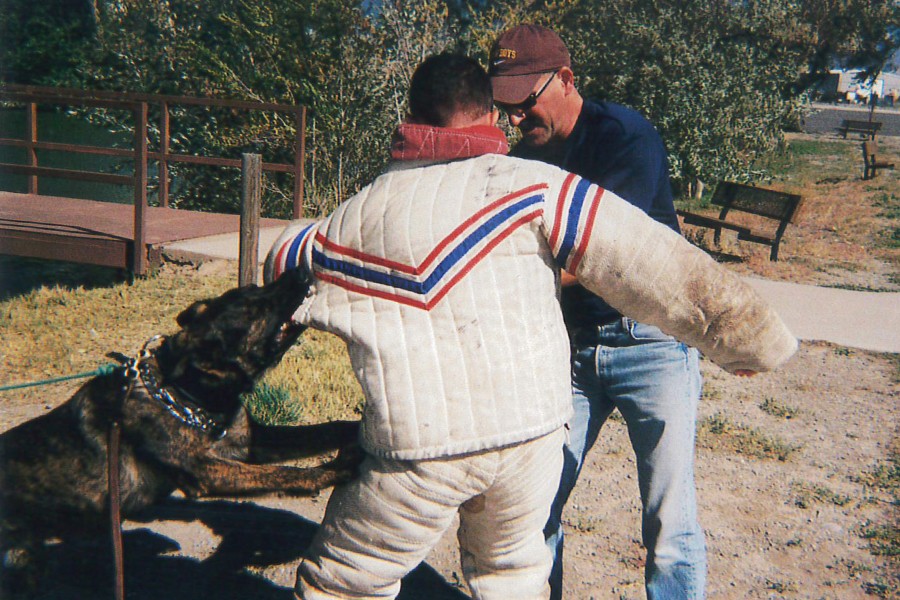
Police dogs also undergo training for tracking, suspect apprehension, and protection. These dogs learn to follow scent trails, indicate a person’s presence, and restrain or detain individuals on command—always under the handler’s control. Throughout, the human-dog bond is reinforced to ensure trust and precision, making these dogs not only effective partners in law enforcement but also deeply loyal protectors.
K9 Professional - Protection & Government Work
Training a dog for police work and detection tasks like drug or bomb sniffing is highly specialized and rigorous, requiring intelligence, focus, and a strong work drive. The process begins with basic obedience and socialization to ensure the dog is responsive to commands and comfortable in various environments. From there, the dog is exposed to controlled distractions, loud noises, and different surfaces to build confidence and adaptability—crucial traits for working in unpredictable real-world scenarios. For detection work, dogs are trained using reward-based methods to recognize and alert to specific odors—such as narcotics, explosives, or accelerants. This begins with imprinting: associating the target scent with a favorite toy or treat. The dog learns to search methodically and signal a find through a passive response (like sitting or staring) or an active one (like scratching), depending on the handler’s needs and safety concerns. Consistency, short frequent sessions, and varied training environments are key to developing reliable detection skills. Police dogs also undergo training for tracking, suspect apprehension, and protection. These dogs learn to follow scent trails, indicate a person’s presence, and restrain or detain individuals on command—always under the handler’s control. Throughout, the human-dog bond is reinforced to ensure trust and precision, making these dogs not only effective partners in law enforcement but also deeply loyal protectors.